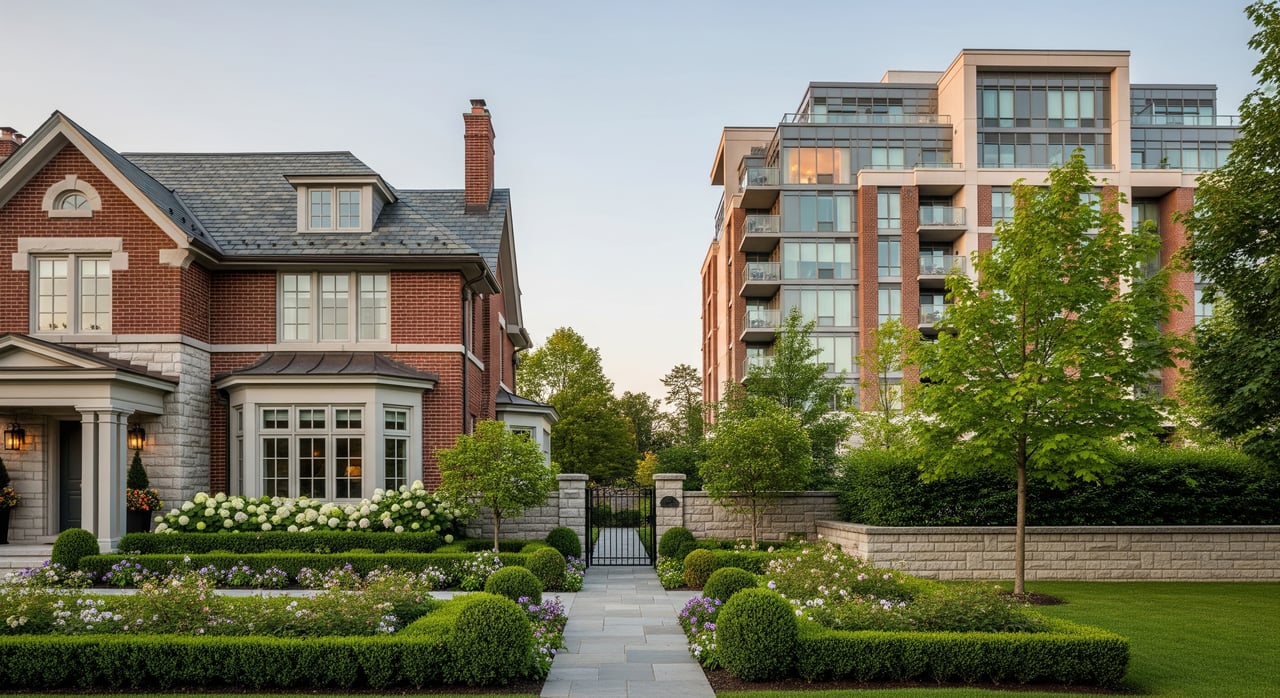
Freehold vs Condo Ownership in Newmarket
December 4, 2025
December 4, 2025
Choosing between a freehold home and a condo in Newmarket can feel like two very different paths to the same goal. You want the right space, a manageable budget, and a location that works for your life. This guide breaks down the real differences in costs, maintenance, rules, and resale so you can move forward with confidence. Let’s dive in.
A freehold owner holds title to both the land and the building. You control your property and the space around it. A condo owner holds title to a specific unit plus a percentage of the common elements that a condo corporation manages.
With a freehold, you handle everything on your lot. That includes the roof, exterior, lawn, driveway, and repairs. In a condo, the corporation maintains shared areas like hallways, exterior elements, amenities, and certain building systems. Those services are funded by monthly condo fees.
Freeholds do not have a condo corporation. You are mainly guided by local bylaws and any private agreements that may exist in a community. Condos are governed by a board under the Condominium Act, 1998. Owners follow the declaration, bylaws, and rules that can cover pets, parking, noise, renovations, and rentals.
Condos are often the more affordable entry point for first-time buyers, while freeholds typically command higher prices per property. Both property types follow the same basic mortgage rules, but lenders may place extra conditions on certain condo buildings. Lenders look at the building’s financial health, owner-occupancy levels, and legal status, which makes the status certificate an important part of underwriting.
Condo fees do not replace property taxes. You pay both. Condo fees can increase over time as buildings age or as services expand.
Ontario law requires condo corporations to maintain a reserve fund and conduct periodic studies to plan for major repairs. If the fund is short, owners can face special assessments. When you consider a Newmarket condo, always look at recent reserve fund studies, planned capital projects, and fee trends before you commit.
In Ontario, condo ownership is governed by the Condominium Act, 1998. Owners elect a board, vote on major changes when required, and have rights to review records like financial statements, budgets, and meeting minutes. This framework sets the rules for how the building is managed and how costs are shared.
A status certificate is essential for condo buyers. It outlines the corporation’s financials, reserve fund balance, budget, rules, bylaws, parking and locker details, and any ongoing legal matters. Ask your lawyer to review it and watch for:
Condo rules often cover pets, parking, renovations, and rental limits. Some buildings restrict short-term rentals, and local municipal rules can also apply. Freeholds are still subject to local bylaws, and certain areas may have heritage or planning constraints.
Condos can deliver a lower-maintenance lifestyle with shared amenities like gyms or party rooms. Snow removal, landscaping, and exterior upkeep are typically handled for you. This can be appealing if you want convenience, community spaces, or a lock-and-leave setup.
Freeholds give you more privacy and control, plus outdoor space and flexibility for renovations. If you want a backyard, room to grow, or more autonomy, freehold ownership often fits better. Keep in mind you carry full responsibility for upkeep and major repairs.
Newmarket’s growth is shaped by regional transit and planning. Intensification has focused along Yonge Street and Davis Drive, and near transit nodes. Access to GO Transit on the Barrie line, York Region Transit and VIVA routes, and Highway 404 can influence demand for both condos and freeholds. If you commute, weigh your daily travel against where you buy. Proximity to transit, commercial corridors, and services can support resale demand over time.
Your ownership horizon matters. Condos can suit downsizers, young professionals, and commuters who value convenience. Freeholds often appeal to households that want more interior space and yards. Resale depends on the neighbourhood or building, reputation, maintenance history, amenities, and market cycles. In Newmarket, proximity to transit, schools, and retail nodes is one factor that can support liquidity and demand.
Pre-construction purchases come with unique steps. Consider deposit structures, assignment clauses, interim occupancy, and HST treatment. Resale condo buyers should focus on the building’s financial health, reserve fund studies, and any recent capital projects or litigation. For either path, reputation and documents matter as much as finishes.
Freehold owners insure the entire property and structure. Condo corporations insure the building and common elements, while you carry a unit owner policy for interior finishes, personal property, and liability. Check deductibles and any building-wide insurance changes noted in the status certificate.
When you buy in Newmarket, Ontario’s provincial land transfer tax applies. There is no separate municipal land transfer tax as in Toronto. Resale homes are generally HST-exempt. New condominium purchases from a builder typically include HST with potential rebates in specific cases. For exact calculations, speak with a lawyer or tax professional.
The right choice comes down to how you plan to live, your budget for ongoing costs, and how long you expect to own. Align those factors with Newmarket’s transit, growth corridors, and neighbourhood dynamics, and you will land on a clear path.
Ready to compare actual listings and numbers side by side? Reach out to Sam Galloway for responsive, one-on-one guidance that puts your goals first.
From understanding market trends to mastering effective negotiation strategies, Sam’s sophisticated approach ensures you make informed decisions every step of the way.